
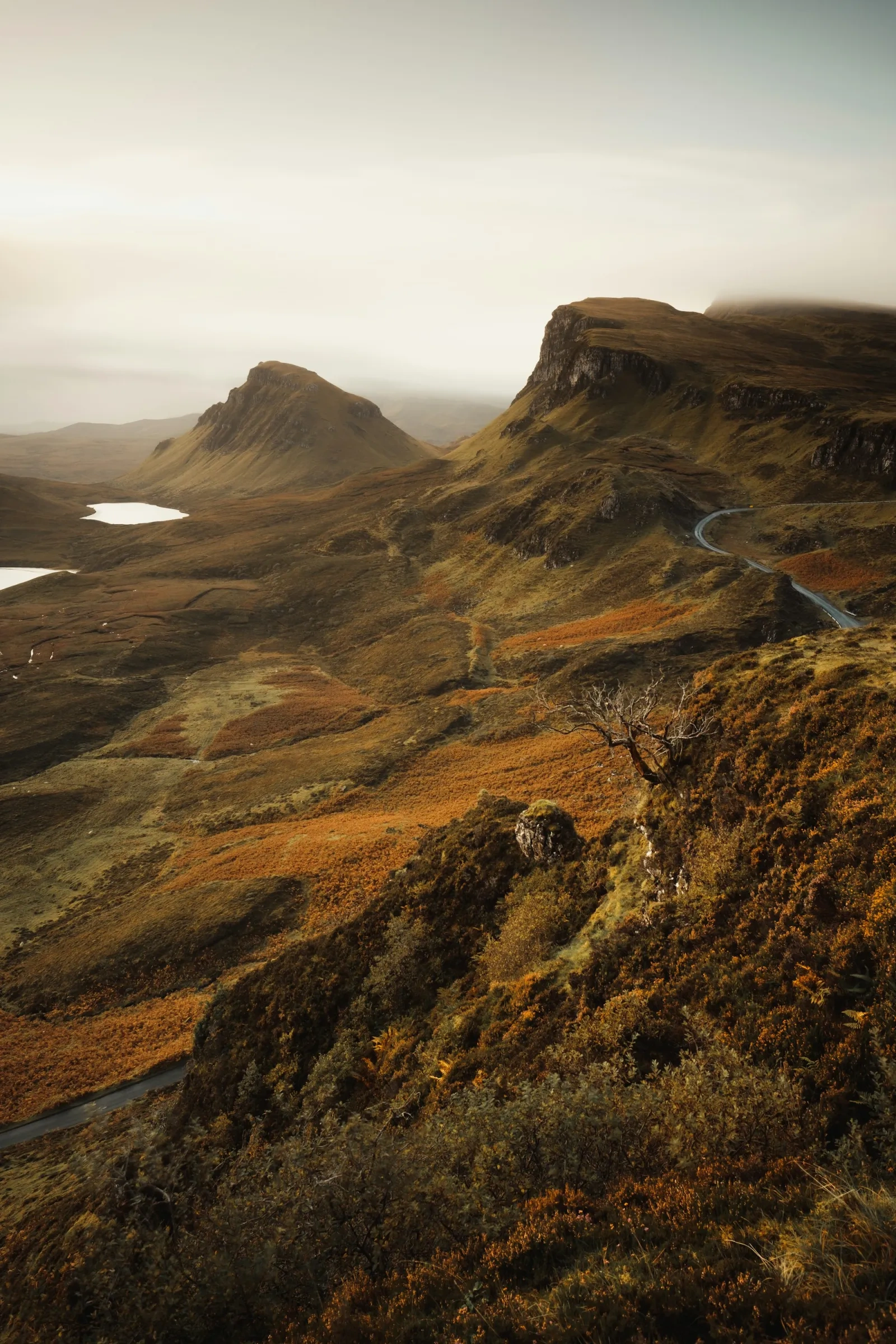
Scotland rewards a slower road trip: a short coastal stage can fill a day once you allow for giving way on narrow roads, a beach walk and a small museum. Choose a region that matches your available nights, then book accommodation before building a list of detours. These five routes are alternatives, with separate starting points and overnight plans. Choose one, or allow additional transfer days and nights when combining regions.
Choose a route and count the nights
The plans below assume you are ready to leave the stated starting town on the first morning, except for the North Coast 500 plan, which includes an Inverness arrival night. Add nights for long flights, city sightseeing or an early departure. Driving stages exclude stops and should be checked against live conditions rather than treated as fixed promises.
| Route | Suggested length | Overnight plan | Main planning constraint |
|---|---|---|---|
| North Coast 500 | 8 days, 7 nights | Inverness 1; Torridon or Gairloch 2; Ullapool 1; Durness area 1; Thurso or Wick 1; Inverness 1 | Remote accommodation, single-track roads and weather |
| Scottish Borders | 3 days, 2 nights | Melrose or nearby Borders town 2 | Heritage opening times and a separate Edinburgh city stay |
| Speyside | 4 days, 3 nights | Dufftown or Craigellachie 3 | Book tours and arrange separate transport for whisky tastings |
| Isle of Skye | 4 days, 3 nights | Portree or Broadford 3 | Limited rooms, narrow roads and outdoor conditions |
| Loch Lomond and Glencoe | 4 days, 3 nights | Loch Lomond area 1; Glencoe or Fort William 2 | A82 delays and a realistic choice of walks |
1. North Coast 500: an Inverness loop with time on the west coast
The North Coast 500, commonly shortened to NC500, is a roughly 516-mile coastal circuit starting and finishing in Inverness. VisitScotland recommends five to seven days or more. This eight-day outline includes an arrival night and a final night in Inverness, leaving the departure day free of remote driving stages.
Day 1 is for arrival, shopping and collecting the car only when rested. On Day 2 travel west towards the Torridon or Gairloch area, choosing your road and lodging together: those are alternative bases, not neighbouring streets. Stay two nights, using Day 3 for a local coastal outing or a walk suited to the weather. Do not attempt several major mountain hikes in the same day.
Day 4 continues north to Ullapool. Day 5 runs through the north-west to the Durness area, with a small number of planned stops rather than every beach and viewpoint. Day 6 follows the north coast towards Thurso or Wick; choose one overnight base before setting off. Day 7 follows the east coast back to Inverness. Day 8 is for departure, with time for refuelling and returning the car. The seven nights in the table include both Inverness stays.
Bealach na Bà, the pass to Applecross, is an optional challenging detour, not a test every visitor must complete. Avoid it if inexperienced on steep single-track hairpins, if driving an unsuitable large vehicle, or if conditions are poor. The A896 offers an alternative towards Shieldaig that bypasses the pass and Applecross peninsula. Even an alternative approach to Applecross requires narrow-road confidence. Check NC500's vehicle and route advice before choosing it.
Book the small northern bases early, including dinner where choices are limited. If accommodation is unavailable, redesign that stage before booking the rest. A Durness beach stop does not justify parking in a passing place, and Smoo Cave access or boat trips depend on current conditions. Orkney adds a ferry timetable and extra nights; it is a separate extension rather than a quick detour on the return day.
2. Scottish Borders: abbeys and small towns from Edinburgh
For a shorter trip with less remote driving, leave Edinburgh for the Borders and spend two nights in or near Melrose. This is a three-day return trip; Edinburgh sightseeing and any arrival night are additional. Keeping one base makes it easier to adjust for rain and heritage-site opening hours.
On Day 1 travel south and choose a principal visit, such as Melrose Abbey, followed by time in the town. Check Historic Environment Scotland's current access information: restoration, partial closures and seasonal hours can change what a ticket includes. A ruined abbey is not necessarily fully accessible throughout the year.
Use Day 2 for Jedburgh and Kelso, choosing one substantial heritage visit and leaving time for lunch and town walks. On Day 3 return to Edinburgh with an optional stop near the route, such as Abbotsford if its current opening arrangements suit. Do not add every abbey, country house and viewpoint simply because the distances look small.
If continuing south instead, compare the cost and permission for returning the car in Newcastle. Hadrian's Wall is in England and needs its own stop and extra time; it is not a Scottish Borders attraction to squeeze into this return itinerary. Central Edinburgh is better explored without a rental car, so arrange collection and return around your regional trip.
3. Speyside: three nights with a plan for tastings
Use Dufftown or Craigellachie as a three-night base for a four-day trip beginning and ending in Inverness. Aberdeen is another possible gateway, but it changes the transfer stages and rental arrangements. The towns and distilleries are spread out: staying in the region does not make every tour safely walkable.
Day 1 is the transfer from Inverness and a local walk. On Day 2 book one principal distillery experience, for example at Glenfiddich if the current tour schedule suits, and arrange the whole day's transport before tasting. Use Day 3 for another reserved visit, a cooperage experience or a riverside walk on an open, suitable section of the Speyside Way. Day 4 returns to Inverness, leaving time for the car handover.
The nominated driver should drink no alcohol. Arrange a local taxi or guided excursion in advance if everyone wants to taste; rural taxi availability cannot be assumed. Do not use a statutory alcohol limit to calculate a supposedly safe number of drams. Alcohol can also remain in your system the next morning.
Tour ages and family access vary by operator and by experience. Some tours exclude under-18s; others permit accompanied children in specific areas. Check the exact booking's minimum age, accessibility and tasting rules instead of assuming that every visitor must be eighteen simply to enter any distillery. Check cancellation terms and arrive before the stated check-in time.
4. Isle of Skye: one base, three nights and a weather alternative
This four-day plan starts and ends in Inverness and uses three nights in Portree or Broadford. They are alternative bases with different distances to attractions. Portree is convenient for the north; Broadford can suit the bridge approach. Compare actual lodging and parking before choosing. Add a night if you want more walking time or to continue towards Fort William rather than return to Inverness.
Day 1 follows the mainland route towards Kyle of Lochalsh and crosses the Skye Bridge. Eilean Donan Castle is at Dornie on the mainland, before the island: allow a separate visit if open, rather than presenting it as a Skye town. Bridge access means a ferry is not required for this itinerary.

Day 2 can focus on Trotternish, choosing the Old Man of Storr walk or a shorter coastal visit according to fitness and weather. The Storr is an uphill walk on exposed terrain, not a photograph taken beside the car. The Quiraing also involves narrow approach roads and terrain where wind and poor visibility matter. Use designated car parks and turn back rather than force an unsuitable walk.

Day 3 can concentrate on the west of the island, such as Dunvegan and a nearby coastal stop, with an indoor alternative if conditions deteriorate. A distillery visit needs the same sober-driver arrangements as Speyside. Avoid combining the far north, Fairy Pools and far-west viewpoints into one crowded day.
Day 4 returns over the bridge and through the mainland towards Inverness. If you prefer the Mallaig–Armadale ferry for a different onward route, check CalMac's actual sailing, vehicle reservation and check-in requirements before redesigning the trip. A cancelled ferry needs a workable bridge alternative and sufficient onward time. Do not attach a distant flight to a tight sailing connection.
5. Loch Lomond and Glencoe: a Glasgow loop with a full local day
Allow four days and three nights: one near Loch Lomond, followed by two in Glencoe or Fort William. Start and finish in Glasgow. This gives the A82 corridor its own trip instead of treating it as an extra after driving the NC500.
On Day 1 leave Glasgow for Loch Lomond and choose a village or signed walking route suitable for the day's conditions. On Day 2 continue north on the A82 through the western Highlands, limiting roadside stops to places where parking is permitted. Parts of the road beside Loch Lomond are narrow and busy; a larger SUV does not remove the need for careful positioning and patience.
Spend Day 3 locally. Glencoe's National Trust for Scotland visitor centre offers landscape and history interpretation; combine it with an appropriate lower-level walk if conditions allow. A Ben Nevis summit attempt is a separate mountain day requiring suitable fitness, navigation, equipment and weather judgment. It is not a casual addition before driving back to Glasgow.

Day 4 returns to Glasgow, allowing for A82 traffic and roadworks. Glenfinnan is an optional extra requiring time, appropriate parking and a timetable check if a train view is your purpose; it is not guaranteed simply by reaching Fort William. Add a night rather than making your final driving day depend on several timed attractions.
Driving documents, rental cover and road habits
Scotland drives on the left, with roundabouts taken clockwise. Road distances and signed speed limits use miles and miles per hour. Obey posted maximum speeds and slow down further whenever road or weather conditions require it. A single-track road has one lane shared by traffic travelling in both directions. Pull into a passing place on your left; when the passing place is on your right, stop opposite it and let the approaching vehicle use it. Let faster following traffic pass when safe, and be prepared to reverse to a suitable passing place. Never park in a passing place.
Great Britain comprises England, Scotland and Wales. For a visitor to Great Britain holding a full, valid licence from a country in GOV.UK’s “any other country” category, including mainland China, the official checker permits driving covered small vehicles for up to twelve months from the last entry into Great Britain. Your licence must remain valid throughout, and you must meet the relevant age and vehicle conditions. Residents and holders of licences from other categories should use their own result in the GOV.UK checker.
Bring your original, valid national driving licence. Before booking, ask the rental collection branch which supporting translation or International Driving Permit (IDP), where applicable, it accepts. Also confirm the minimum number of years you must have held your licence, driver age, identification and deposit card requirements. An IDP or a translation must be accompanied by the original national licence. Neither document replaces that original licence. A privately sold document marketed as an international driving licence does not itself establish legal driving entitlement.
Motor insurance is compulsory; third-party cover is the legal minimum. Ask what is included in the rental and confirm every driver is authorised. Collision-damage waivers, theft protection and excess reduction have separate terms and exclusions; they are not all compulsory purchases under road law. Check glass, tyres, underbody, recovery and prohibited-road conditions before paying.
Choose a vehicle you can handle comfortably, with enough luggage space. An automatic compact or modest family car may be easier on narrow roads than a large SUV. Four-wheel drive does not overcome ice, road closures or poor judgment. Do not assume all winter rentals require chains: follow the supplier's instructions, tyre arrangements and the conditions on the chosen roads.
Seasons, costs and checks before departure
May to September usually offers longer daylight, but rooms on Skye and the NC500 can sell out early. Summer midges, rain and sudden wind still affect stops and walks. In winter, northern daylight is short and darkness can arrive in mid-afternoon, rather than at eight in the evening. Check the sunset for the actual date and town, shorten driving days and confirm seasonal opening hours. Mountain conditions can be severe even when the road looks clear.
Build a budget in pounds sterling using actual quotes: accommodation per room, car hire per vehicle, fuel, parking, meals, reserved attractions and any taxi or ferry. Divide shared costs by the actual number of travellers. Remote fuel prices, seasonal room rates and rental excess deposits make an unsupported fixed US-dollar daily budget misleading. Save offline maps and refuel before remote stages; do not rely on every small filling station being open late.
Check UK entry requirements for the passport you will use. A visa and an electronic travel authorisation are different permissions; an ETA does not replace a required visa. Mainland Chinese ordinary-passport tourists generally need the appropriate UK visitor visa. Use GOV.UK's checker for your circumstances before booking non-refundable travel.
Responsible Scottish access rights do not provide a general right to drive or park a motorhome overnight. Follow the Outdoor Access Code, local restrictions and campsite arrangements. Some Loch Lomond areas have additional seasonal camping rules. Keep gates and access clear, take litter away and use proper waste-disposal facilities. Before each remote stage, check Traffic Scotland, the forecast, your accommodation arrival arrangements and the day's realistic stopping points.
Official planning references
Use the official pages below to check route advice, driving requirements, access and reservations for your dates. Confirm prices, seasonal opening hours and road conditions shortly before travel.
VisitScotland: North Coast 500 overviewExternal site Opens an external website in a new tab
North Coast 500: planning your adventureExternal site Opens an external website in a new tab
Glenfiddich: current distillery tour bookingExternal site Opens an external website in a new tab
National Trust for Scotland: GlencoeExternal site Opens an external website in a new tab
GOV.UK: vehicle insurance and the legal minimumExternal site Opens an external website in a new tab
GOV.UK: check whether you need a UK visaExternal site Opens an external website in a new tab
Scottish Outdoor Access Code: campingExternal site Opens an external website in a new tab
Met Office: UK weather warningsExternal site Opens an external website in a new tab